
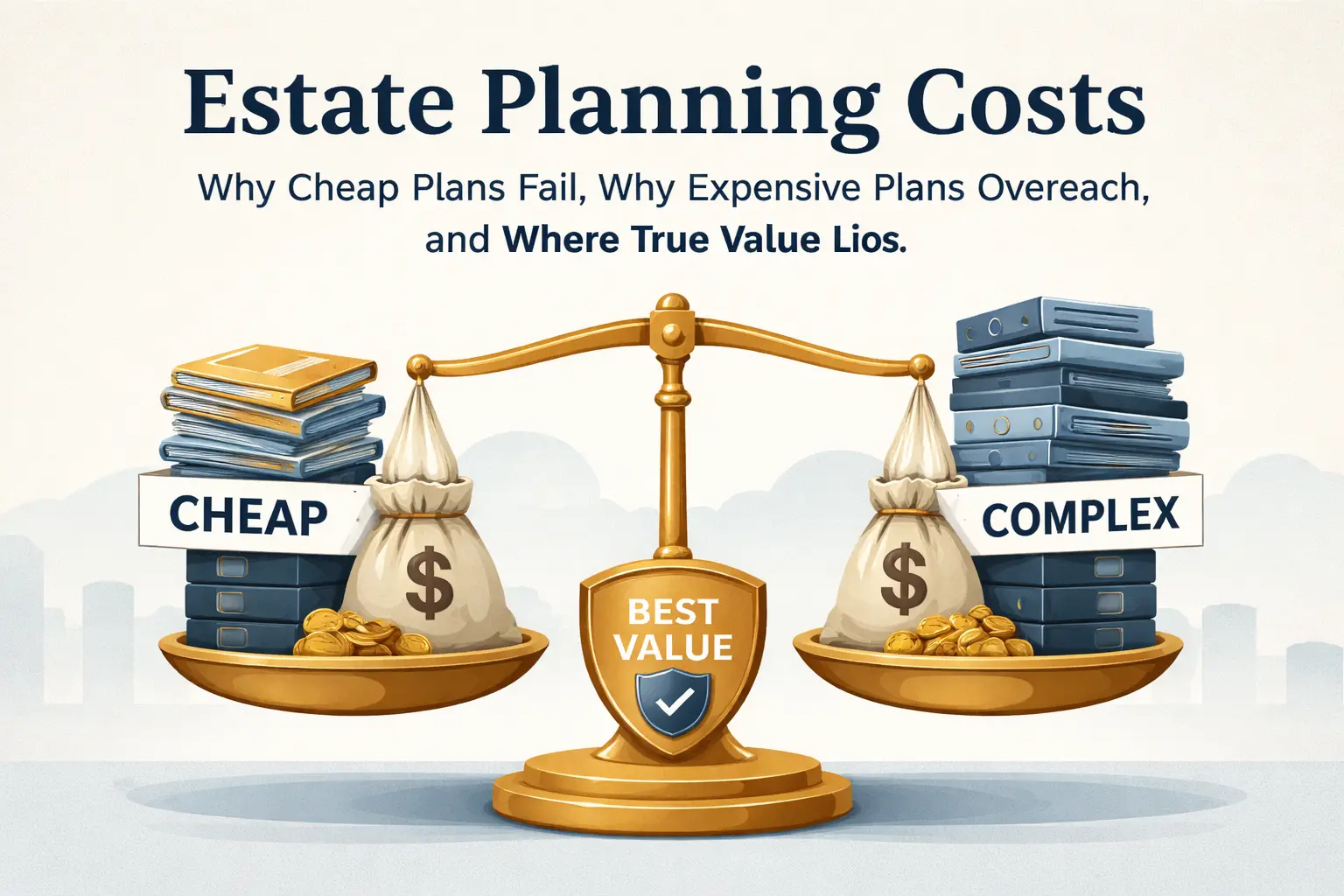
Estate Planning Costs: Why Cheap Plans Fail, Why Expensive Plans Overreach, and Where True Value Lies

Omid J. Afati
Estate Planning AttorneyEstate planning fees vary dramatically, ranging from a few hundred dollars to well over $10,000. While many people understandably focus on price, the true question is not how much an estate plan costs - it is what the plan actually does when it matters most. Understanding the difference between cheap, excessive, and high-quality estate planning can save families enormous financial and emotional cost down the road.
Why Cheap Estate Plans Often Fail
Low-cost estate plans are typically built on speed and volume, not strategy. These plans commonly rely on standardized templates, limited attorney involvement, and surface-level discussions of assets and family dynamics. While they may appear legally sufficient on paper, they often fail under real-life conditions.
Common issues with inexpensive plans include poorly drafted or generic trusts, missing incapacity provisions, unfunded trusts, and no coordination with beneficiary designations. Many do not properly address California probate thresholds, community property rules, or how assets actually pass at death. Others fail to contemplate blended families, minor children, or conflict-prone beneficiary relationships.
As a result, families are frequently forced into probate or trust litigation despite having “an estate plan.” The savings realized at the time of signing are often erased, and multiplied, by court fees, attorney costs, delays, and family conflict after incapacity or death. In estate planning, cheap plans regularly become the most expensive plans of all.
Why Extremely Expensive Estate Plans Can Be Excessive
At the opposite end of the spectrum are estate plans costing over $10,000. These plans are sometimes appropriate for individuals with ultra-high net worth, complex business interests, or sophisticated tax exposure. However, for many families, they are more plan than the situation requires.
Overly expensive plans often emphasize complexity over clarity. Advanced tax strategies, layered trust structures, and specialized entities may be included even when the client’s estate does not warrant them. These features can create higher ongoing administration costs, increased risk of trustee error, and confusion among beneficiaries who must later manage the plan.
More complexity does not always mean better protection. In fact, unnecessary sophistication can increase the likelihood that a plan is misunderstood, improperly administered, or ignored altogether. An estate plan only works if it is understood, maintained, and executed correctly.
Why High-Quality Planning Offers the Best Value
High-quality estate planning strikes a deliberate balance between protection and simplicity. These plans typically reflect careful attorney involvement, meaningful customization, and thoughtful design without unnecessary excess.
These plans address both incapacity and death, ensure proper trust funding, and coordinate assets, beneficiaries, and legal authority. They are tailored to the client’s family structure, asset composition, and long-term goals, not simply generated from a checklist.
Equally important, high-quality planning includes education and guidance. Clients understand how their plan works, what their trustees and agents must do, and how to keep the plan current as life changes. This clarity dramatically reduces the risk of disputes, court involvement, and unintended outcomes.
The Bottom Line
Estate planning is not an area where the lowest price delivers the best outcome, nor is it one where cost alone guarantees quality. The most effective plans are built with judgment, experience, and restraint.
True value lies in a plan that is designed to work in the real world, protect loved ones, and withstand scrutiny, without unnecessary complexity or waste.